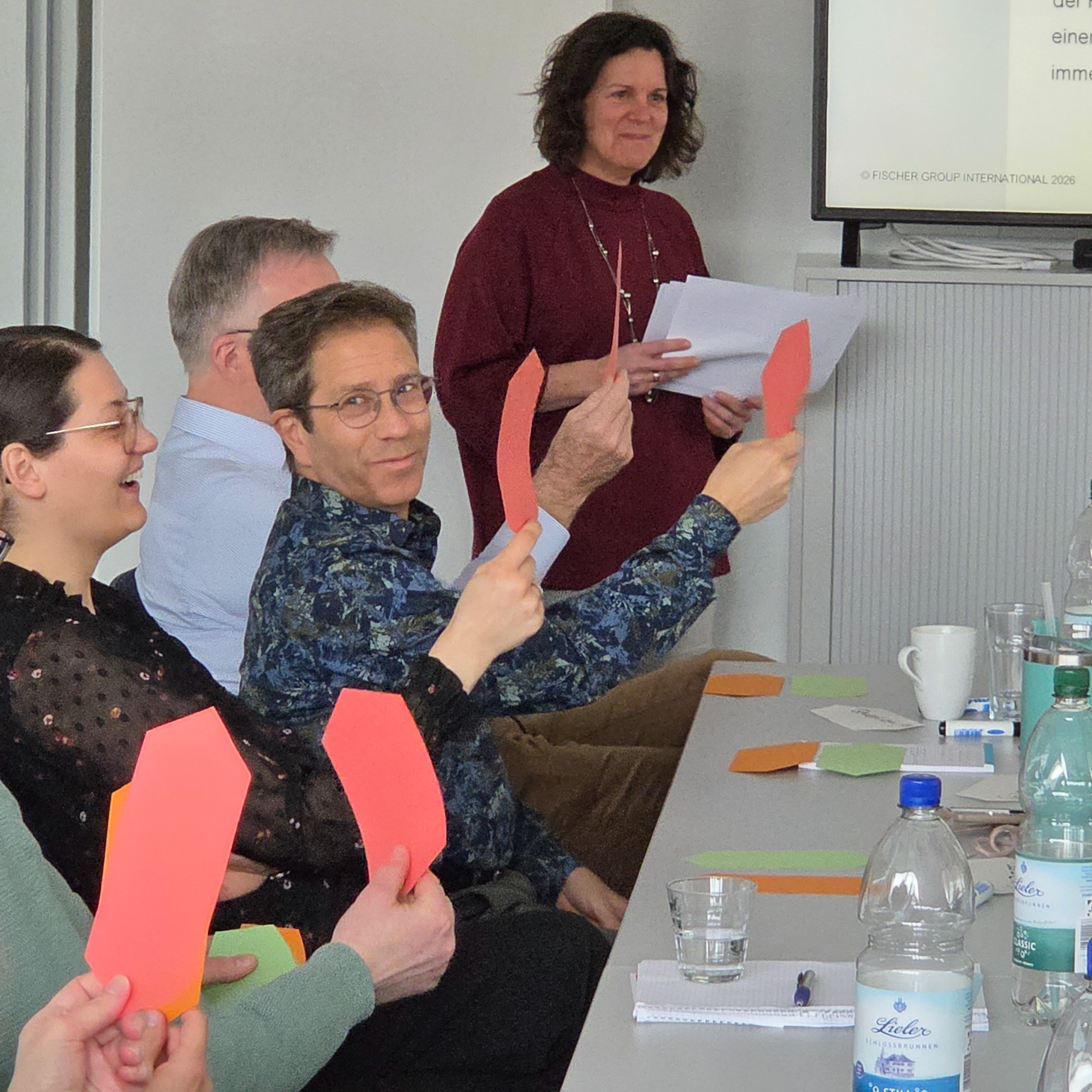
As part of regular internal workshops, we engage with our six company values: professionalism, cooperation, responsibility, trust, respect and appreciation. The central question is what these values mean for our day-to-day collaboration - both within teams across different sites and in our work with customers.
During these workshops, it became clear that the topic of failure culture is particularly closely linked to all six values.
This topic has significant practical relevance, especially in the GMP and GDP environment. Work in this area is shaped by regulatory requirements, defined standards and established processes. Deviations can have an impact on product quality, patient safety and the company’s reputation. It is therefore essential to prevent errors as far as possible while also ensuring that they are handled professionally.
Since human work cannot be made completely error-free, even in well-organised systems, the way errors are dealt with is just as important as prevention.
At PharmaKorell, clear processes, clearly defined responsibilities, well-organised quality management and a culture of trust all play an important role in preventing errors.
A resilient failure culture begins where errors occur despite preventive measures. For PharmaKorell, a good failure culture therefore means using errors as a starting point for learning and improvement. This requires the ability to speak about errors openly, objectively, solution-orientatedly and on an equal footing. In this context, both the factual level and the relationship level of communication are relevant.
To address this connection systematically, two consecutive workshops were held, prepared by Dr Cora Büttner together with an external company. While the first workshop was moderated externally, Cora actively contributed to the facilitation of the second workshop as co-moderator.
First workshop
During the first workshop in 2025, the three most common everyday errors were collected from all working areas at PharmaKorell. These errors were then assigned to categories and assessed using the risk classes anchored in the quality system. The assessment took into account both the severity of the impact and the frequency of occurrence.
After the workshop, it was reviewed whether additional error-prevention measures should be established for the top three errors identified in each area. This approach was deliberately based on the structured handling of errors as embedded in the GMP system.
Another key focus of the first workshop was communication about errors. It is precisely in this context that it becomes clear that factual analysis and interpersonal interaction cannot be considered separately.
Second workshop
Recently, the topic was explored in greater depth in a second workshop. The focus was broadened from communication about errors to respectful communication in challenging situations. Particular emphasis was placed on clarity, self-regulation and mutual respect.
The workshop built on the four sides of a message according to Friedemann Schulz von Thun, which had already been addressed previously. Schulz von Thun is a German communication psychologist who developed a communication model according to which every message contains several levels: factual content, self-revelation, relationship and appeal.
Communication on an equal footing means that conversation partners treat one another with the same level of respect and regard each other as equal, irrespective of role or situation. This is particularly relevant when dealing with errors, as factual clarification is most successful when communication is not dominated by superiority or subordination.
Transfer into everyday working life
A central topic of the workshop was how the content developed could be transferred into practice and how the company’s own communication in critical situations, as well as its failure culture, could be further developed.
At the end of the workshop, each team member formulated a personal future contribution to successful communication as part of a gallery walk.
In addition, it is planned to use the “Highlights” session in regular jour fixe meetings to exchange experiences and discuss improvements that have arisen from errors. Mutual feedback on one’s own communication style is also expressly welcome.


